
Signs of Life Review: Is the 1.0 Survival Sandbox Worth It?
Our Signs of Life 1.0 review: a deep survival sandbox with a real ending, strong co-op and a steep learning curve, now at a lower price.
Signs of Life is a generous, systems-heavy survival sandbox with a genuinely unusual setting. 1.0 makes it a complete game, but it does not sand off the learning curve.
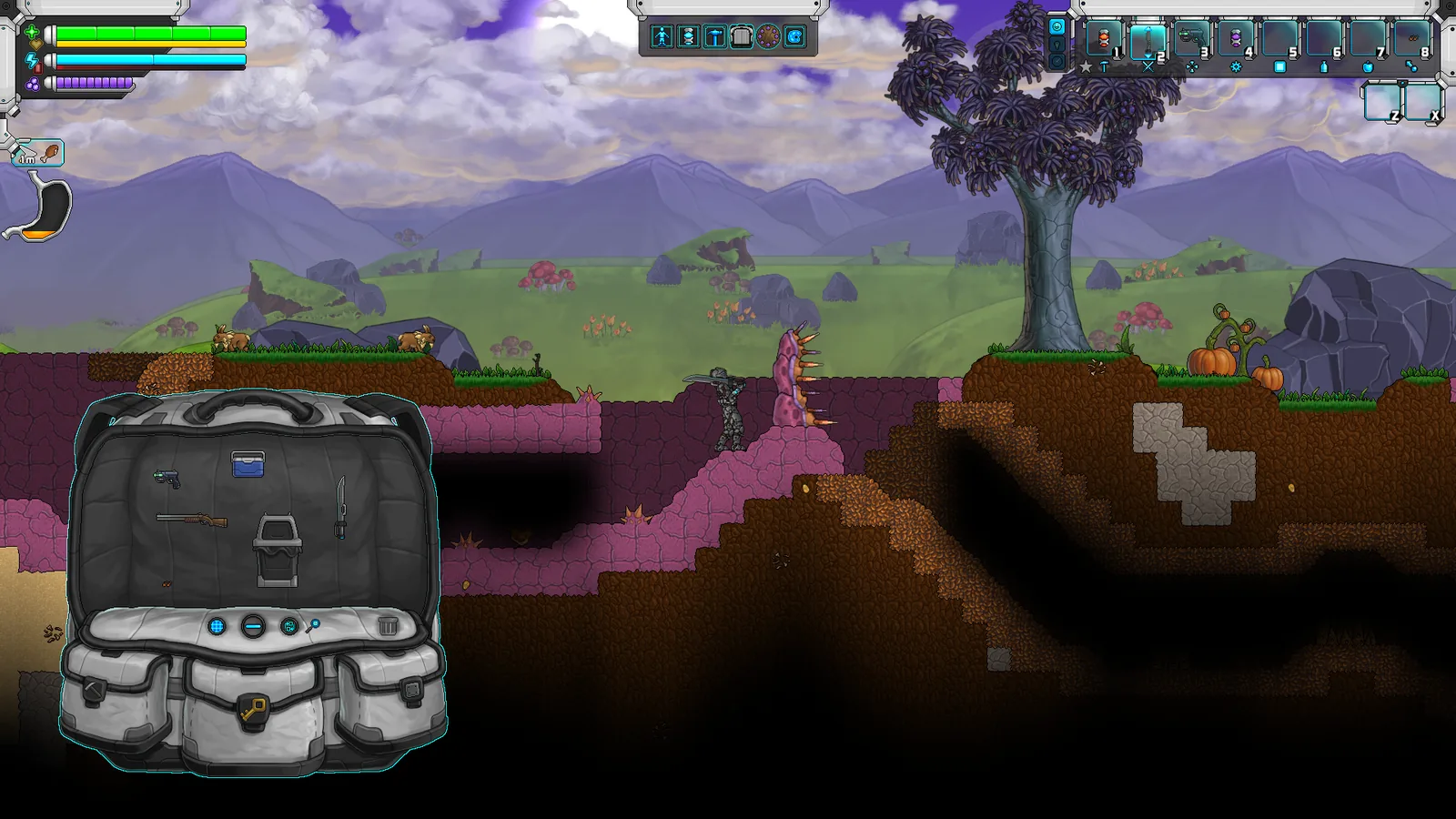
Signs of Life has been on Steam since January 2014. That is a long time for a two-person project to stay in Early Access, and it shows in both directions: the systems are deep and interconnected, and the onboarding still assumes you are willing to read, experiment and fail.
The 1.0 release costs $9.74 at a 35 percent discount from $14.99, and it includes an ending, Xenoid cities, post-game colony management and a long list of fixes. At that price, the question is less "is it finished" and more "is it for you".
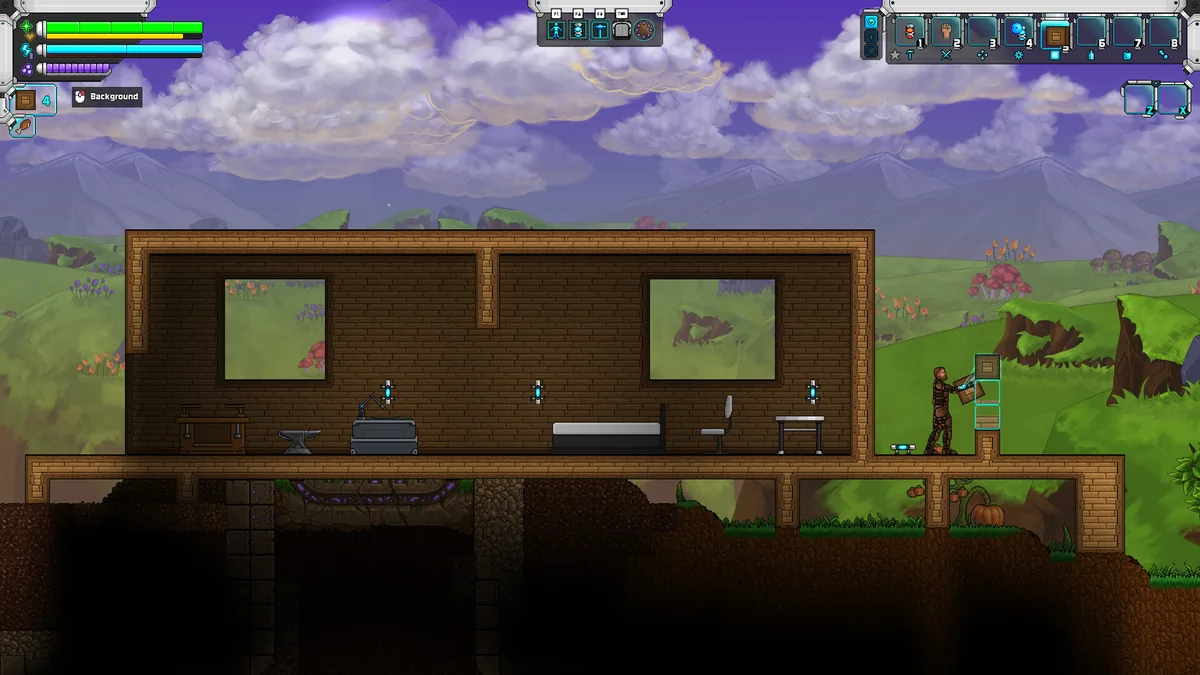
The sandbox still rewards a well-placed base.
What Signs of Life does well
The setting earns its strangeness
Osiris is not another generic forest with a crash site. The planet has purple strata, alien ruins, abandoned laboratories, a colony ship that never arrived and a native civilisation that is neither a monster faction nor a quest dispenser. The art is pixel-based but the environments are ambitious: glowing caves, overgrown surface ruins, machine halls and Xenoid settlements all read as places rather than tilesets.
The story is delivered through scanning. You point a tool at an inscription, a datapad or a creature, and the MEG records it. That could be busywork, but the writing uses it to build a history of the colony and the planet. The 1.0 expansion of Xenoid dialogue and family life makes their cities worth walking through.
The crafting chain has real depth
The official wiki lists more than 1,200 recipes and 421 structures. You will not touch most of them, but the ones you do touch form a coherent chain: ore into ingots, ingots into tools, tools into better stations, stations into advanced materials. The Blast Furnace alone changes the pace of smelting, and the hammer-tier requirements force you to plan rather than improvise.
This is the kind of game where a storage room is a gameplay feature. If that sentence sounds appealing, you are the target audience.
Co-op is simple in the right way
There are no dedicated servers and no account systems. One player hosts, friends join through Steam, and everyone brings their own character. Drop-in and drop-out work, shared containers and doors are supported, and the 1.0 patch fixed reconnecting and the co-op ending.
For two friends who want to build a base together on a few evenings a week, this is close to ideal. For a large group that wants a persistent server, it is not.
The ending gives the sandbox a spine
Survival games often end with a shrug. Signs of Life now has a final route, a language-learning chain and credits. The colony layer that follows gives you a reason to keep the world instead of deleting it. That is more than most Early Access graduates manage.
Where it struggles
The onboarding is thin
The game gives you a wake-up sequence, a mining base and a journal, then largely lets you figure out the rest. Important systems such as room validation, power and colony jobs are explained in patch notes and the official wiki, not always in-game.
New players should expect to read. The beginner tips→ and base building guide→ exist because the game does not always tell you what it wants.
The first hours are slow
Mining, hauling and crafting take time. Stamina limits how long you can swing a pickaxe. The early weapons are functional rather than exciting. Players who bounce off slow survival games will bounce off this one.
Performance is modest but not demanding
The minimum requirements are a dual-core 2 GHz CPU, 2 GB of RAM and OpenGL 3.0. That is low by modern standards, but large worlds and busy colonies can still tax older machines. The game offers Small, Medium and Large world sizes, and choosing a smaller world is the simplest performance lever.
The interface assumes patience
The MEG, inventory and crafting menus are denser than they look. The 1.0 update added a separate UI scale and clearer interaction prompts, which helps, but this is not a streamlined console-first interface.
How it compares
If you want a Terraria-like building game with faster combat, Signs of Life will feel methodical. If you want a survival game with a strong narrative mystery, it is closer to a slow-burn exploration game than a base-defence game. If you want co-op survival with a friend and a long weekend, it hits a useful middle ground.
The closest comparison is not any single game but a combination: Terraria's building and gear progression, a Metroidvania's traversal upgrades, and a sci-fi mystery delivered through scans.
Who should buy it
Buy it if:
- You enjoy crafting chains and production planning.
- You have a friend for co-op and can commit to a shared world.
- You like environmental storytelling and do not need every objective marked.
- You want a complete survival game at a low price.
Wait for a deeper sale if:
- You need polished onboarding and voiced tutorials.
- You only play competitive PvP.
- You want a short, linear campaign.
The 1.0 caveat
The 1.0 build is the most complete version, but it is not bug-free. The developer says fixes will continue. If you are sensitive to patch churn, wait a few weeks for the first post-launch patches. If you are not, the current build is playable from start to credits.
One practical warning for returning players: the colony console and the new Prototype Mining Suit locations require a newly generated world. If you want the full 1.0 feature set, start fresh.
Final score
8/10. Signs of Life is not for everyone, but it knows what it is: a deep, strange survival sandbox with a real ending and one of the more interesting alien civilisations in the genre. At $9.74, it is easy to recommend to anyone who likes systems more than spectacle.
The 1.0 changes page→ lists exactly what is new, and the co-op guide→ covers the multiplayer side before you buy a second copy.
Official source: Steam store data, the 1.0 announcement and the official wiki, checked 10 November 2026. This review is based on the released 1.0 build.
Sources and further reading
- Signs of Life on Steam ↗ - price, features and system requirements
- 1.0 release announcement ↗ - scope of the full release
- Official wiki ↗ - recipe and structure counts
- Official multiplayer page ↗ - host and join rules
FAQ
Is Signs of Life worth it in 2026?
Yes, if you like deep crafting and exploration. It is a complete game with an ending, and the launch discount makes it a low-risk purchase for survival fans.
How much does Signs of Life cost?
$9.74 during the 35 percent launch discount, down from $14.99.
Is it better than Terraria?
It is different. Signs of Life is slower and more story-driven, with a stronger focus on scanning and production chains. Terraria is faster and more combat-focused.
Does it have multiplayer?
Yes. Online co-op through Steam friends, with one host and drop-in players. There are no dedicated servers.
Related Signs of Life Guides
A complete Signs of Life guide for 1.0: first-hour route, base building, crafting, co-op, Xenoid story and the post-game colony.
Every major Signs of Life 1.0 change: the ending, Xenoid cities, colony management, rebalanced gear, controls and co-op fixes.
How Signs of Life co-op works: Steam friend hosting, drop-in play, character transfer, shared storage, PvP settings and role splits for two players.
The Signs of Life achievement list with global unlock rates, the gemologist chain, the joke achievements and a practical completion route.
How the Signs of Life alien language works: scan inscriptions, build understanding, unlock Xenoid dialogue and extract seven archive records with AGIS.
How armor works in Signs of Life, the best early and late sets, Ghost Hide and Energy Plate bonuses, mining suits and co-op gear priorities.
More Signs of Life Guides
Automate a Signs of Life base with turrets, Pneumail shared storage, drone accessories and post-game colonist jobs, without wasting power.
How base building works in Signs of Life: valid room sizes, walls, doors, lighting, station layout and the mistakes that waste materials.
Choosing a Signs of Life base location: ore access, flat ground, biome hazards, story travel and the best spots for a first or late-game base.
Practical Signs of Life tips for new players: scan everything, manage stamina, build one good room, and avoid the early base traps.
A tour of Signs of Life biomes: grasslands, purple alien terrain, caves, ruins, Xenoid cities and the late-game New Earth areas.
The major Signs of Life boss fights, the order to attempt them, gear checks and arena tips, plus a pointer to the Buff Mechington Mk2 strategy.
How to beat Buff Mechington Mk2 in Signs of Life: the glowing weak points, head-tail-chest order, the three-second chest window and co-op tactics.
How the Signs of Life colony works: Pioneer Station computer, room requirements, colonist jobs, Pneumail storage and new-world requirements.